Study technology. Solve real problems.

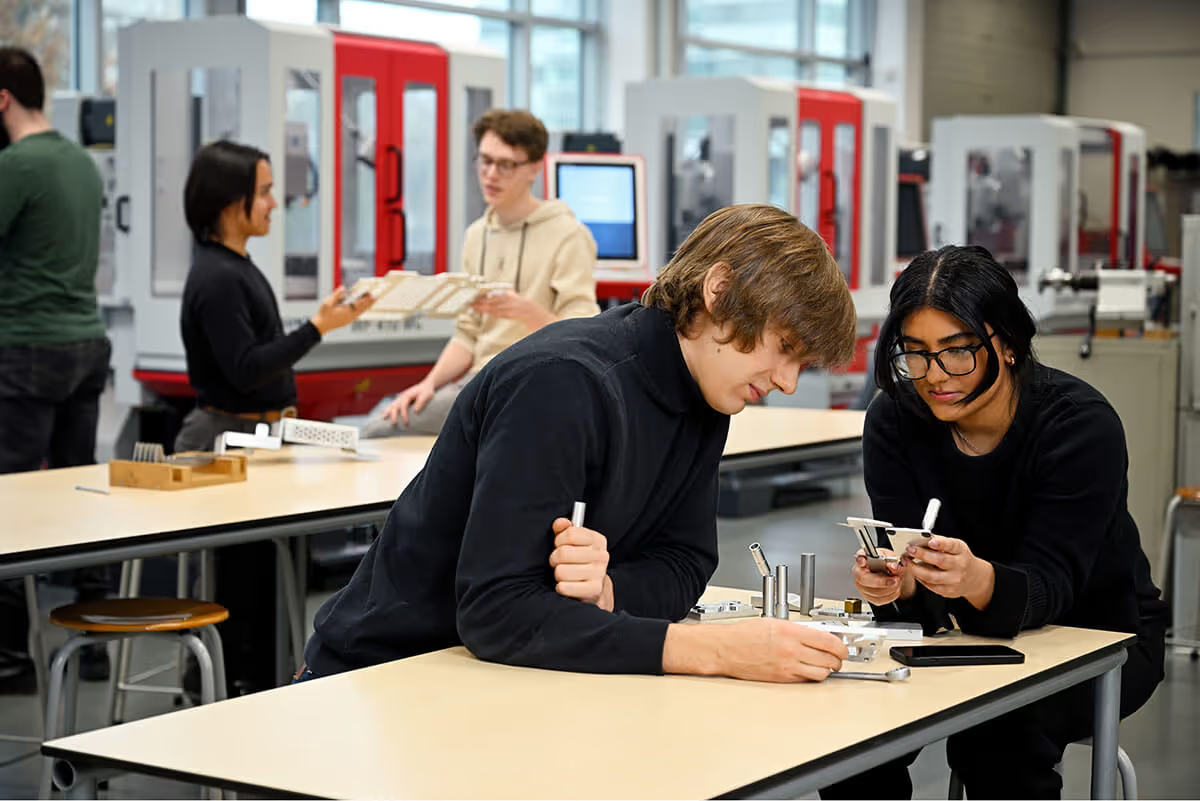
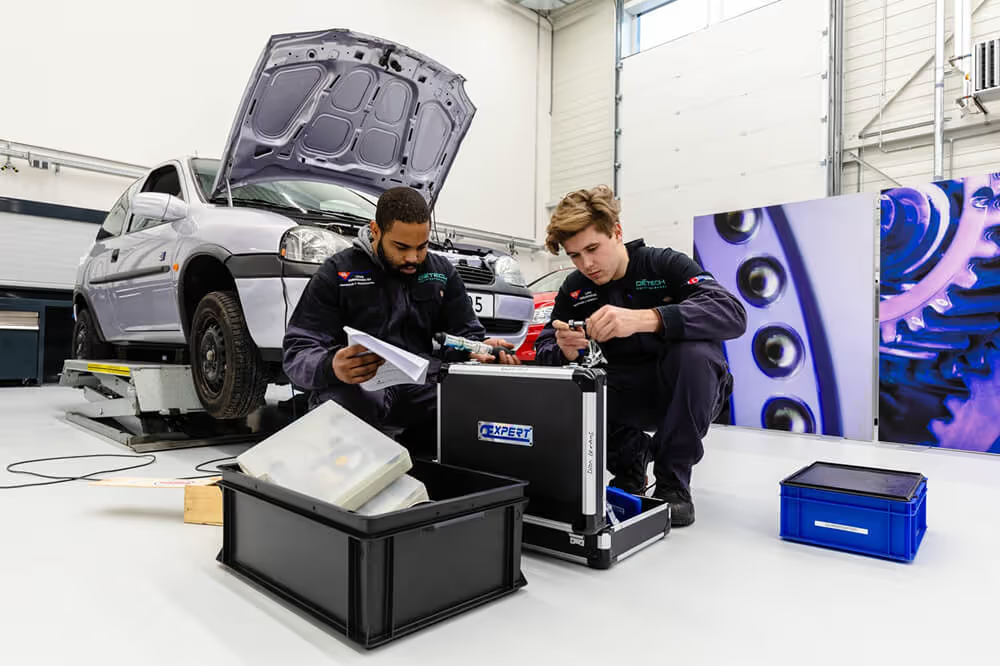
Studying technology in the Netherlands means turning theory into practice. You'll develop technical knowledge and practical skills while working on real-world challenges.

Which tech field suits you?

Whether you want to work for an innovative start-up or an international company, there are many opportunities for graduates in technology. Employers across the Netherlands are looking for people with technical skills and fresh ideas.

Fields of interest

Discover a wide range of study fields that power innovation. From AI and robotics to electronics and IT. Each programme connects classroom learning with real-world tech applications. Explore below or do the quiz first.

What you can expect

Studying tech in the Netherlands opens the door to strong career opportunities. The facts speak for themselves: discover what your future here could look like.

Support with your study choice
Wondering which programme is the right fit for you? Or what it's like to study in the Netherlands? Join online events and hear from students who were once in your position. Or contact one of the study choice advisers at the participating universities. They are there to help you make an informed decision.
Small scale learning, real contact with lecturers
You'll work closely with lecturers and classmates from different cultures and backgrounds, all in small groups. An open and supportive learning environment gives you the confidence to ask questions, share ideas and learn from each other. By working together, you'll develop both your technical knowledge and professional skills, while also growing on a personal level.
A recognised degree
You'll graduate with an internationally recognised degree that prepares you for a career in technology. With 50.000 new positions in tech, your skills will be needed.
Learn from leading professionals
Applied research brings new knowledge into the classroom and student projects. Many lecturers combine teaching with their work in industry or research, which enables them to share first-hand insights and the latest developments in their field.

What is a university of applied sciences?

A university of applied sciences is a higher education institution offering internationally recognised bachelor's and master's degrees that combine theory with practice. Teaching is interactive and focused on applying what you learn in realistic settings.
‍
Throughout your studies, you'll work closely with peers, lecturers, researchers and professionals from the field. Study Tech in NL brings together accredited technology programmes from seven universities of applied sciences across the Netherlands.

Read more

Learn through real projects

Applied learning means you don't just study theory, you also learn how to apply it. During your studies, you'll work on challenges from companies and research groups. You'll tackle problems together and present your work to CEOs, directors and other stakeholders from the field. Curious about what that looks like?

Discover high-tech opportunities

Close connections with the tech industry

One of the advantages of studying at a university of applied sciences is the close connection with world of work. Working with companies helps you understand how they operate, discover where your interests lie and build your professional network.

Kees Buijsrogge, Director TNO Space:
"Everything we do here happens in a project, with a team. Each of TNO Space's research lines is built around what he calls a moonshot: a long-term vision of what governments, the ESA, NASA and otherpartners will need ten to fifteen years from now.

From there, the team builds a roadmap of real, concrete steps to get there. And students, even interns, get to work on those steps. You're working on state-of-the-art work. Not just doing a project, but creating meaningful impact."

Read more

Building a foundation

A tech bachelor’s degree gives you a strong foundation for starting your career, specialising in a particular field or continuing your studies. Are you considering continuing your studies with a master’s degree?
‍
In the Netherlands there is a binary higher education system with two main types of institutions: universities of applied sciences and research universities. Both offer high-quality master’s programmes, but they differ in focus, teaching style and the type of career they prepare you for. Learn more about our education system

Discover high-tech opportunities

Financing your study

Studying abroad is an investment. It's a good idea to understand the costs and your financial options early. Consider tuition fees and expenses such as housing, insurance, transport and study materials. Costs vary depending on your programme, institution and personal situation.

Check the website of Nuffic. They are an independent non-profit organisation that provides information to international students.

Discover high-tech opportunities

Make the most of your student years

Studying isn’t just about learning and working hard. It’s also a time for making friends, having fun and developing yourself.

Whether you’re exploring historic cities, cycling with friends, visiting festivals and museums or simply relaxing at a café, you’ll have the freedom to create a student life that’s truly your own.

The open atmosphere in the Netherlands makes it easy to meet people, build friendships and feel part of the student community.

Discover high-tech opportunities

Find out which tech field suits you

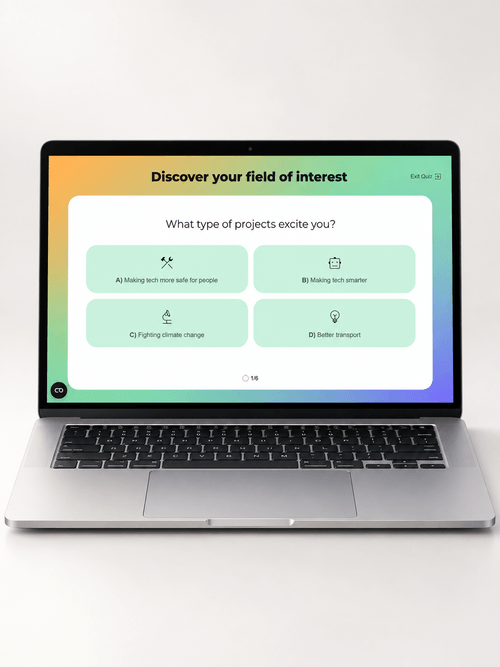
Tech is broad and offers many different possibilities. Take the quiz to discover where your interests lie and which tech field may suit you.

Discover high-tech opportunities
Start the quiz

FAQ

Any questions? We’ve answered the most common ones for you.

Can I combine my studies and work?

Yes, many students work part-time while studying. For non-EU/EEA students, you can work up to 16 hours per week or full-time during summer (June to August), but your employer must obtain a work permit (TWV) for you. Good to know: plenty of businesses (cafés, shops, airport and warehouses) are looking for student workers.

Can I stay and work in the Netherlands after graduation?

Yes. Even if you do need a visa to study in the Netherlands, you can apply for an orientation year after graduation, which allows you to stay up to 12 months to find a job or start a business. During that time, you’re allowed to work without needing a separate work permit.

Do I get help to prepare for a career?

Yes. Universities of Applied Sciences typically provide career services: coaching, CV workshops, connections with companies, and internship support. These services help you bridge from study to the job market. Often, Universities of Applied Sciences also offer Dutch courses on various levels.

What is the difference between Research Universities and Universities of Applied Sciences?

Research Universities offer academically oriented Master’s programmes. They focus on scientific research, theoretical depth, and analytical skills.

Universities of Applied Sciences offer practice-oriented Master’s programmes. These programmes are closely connected to professional practice and industry needs. They emphasise applied research, hands-on learning, and direct implementation of knowledge in real-world settings. Learn more about how the Dutch higher education system is structured.  

What kind of degree will I receive after graduation?

This depends on the study programme you will choose. At a University of Applied Sciences, you can graduate with an internationally recognised bachelor’s or master’s degree. A bachelor or master in the technical field are officially accredited by the NVAO (Accreditation Organisation of the Netherlands and Flanders), which guarantees quality and academic standards recognised throughout Europe. You can search for your programme of interest on the website of the NVAO to learn more about the specific accreditation.

Can I receive a scholarship or grant?

Scholarships or grants depend on the University of Applied Sciences of your interest, the study programme and your nationality. Visit the site of Study in NL to learn more about finding a scholarship. If you require financial aid during your studies, you can check duo.nl for study loans or grants. Also, the NL Scholarship programme may offer partial scholarships, but only to non-EEA students. 

How much does it cost to study in the Netherlands?

The costs of studying in the Netherlands can vary based on your nationality and programme of interest. The annual tuition fees for students from an EEA country, Switzerland or Surinam is € 2,601 for the academic year 2025-2026.  
For students with other nationalities, the average tuition fee for bachelor’s programmes is between € 9,000 and € 20,000, and for a master’s programme between € 12,000 and € 30,000. To know what tuition fees apply to you, consult the specific programme.

Do I need to speak Dutch?

You don’t have to speak Dutch. If you choose an English thaugt programme, you don’t have to speak Dutch. Still, many students choose to learn Dutch after arriving, as it helps in everyday life, when meeting locals, or if you want to stay in the Netherlands for work later on.

"My graduation internship opened the door to a career at Janssen Biologics. What started with an interest in biotechnology has turned into a job where I can make a positive impact on people's lives."

- David, the Netherlands, Process and Food Technology

Still curious? Find your study at a university of applied sciences